Midad

Brand guidelines · Studio product

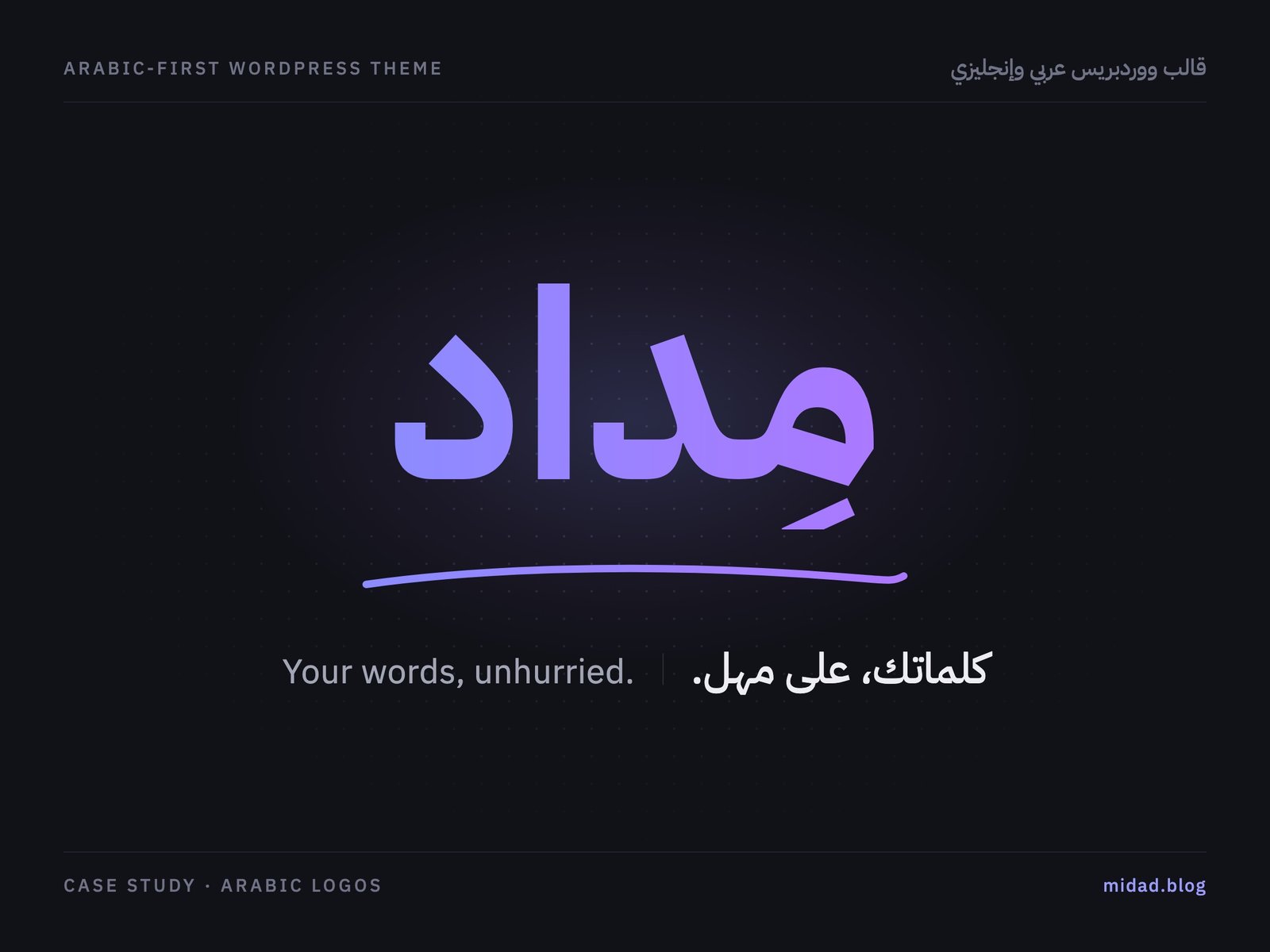
مِداد

An Arabic-first WordPress theme for blogs. The visual system in one page: wordmark, colour, type and rules.

01

Wordmark

مِداد (“ink”) is always set with its kasra, the small mark under the first letter that tells the reader how to say the name: Midad, not Madad. It takes the accent colour of the style it sits in.

مِدادLight
مِدادNight
مِدادPaper
02

Colour

Three styles, each with its own palette, tuned for a long read and not inverted from one another. Every text and accent pair passes the WCAG AA minimum of 4.5 to 1: body text sits between 14.6 and 17.7 to 1, muted text between 5.9 and 7.0, the accent between 5.6 and 7.0.

Light

The default. Bright, quiet, made for daytime reading.

Links, buttons, highlightsIndigo#4F46E5RGB 79, 70, 2296.3:1
Page backgroundPaper white#FFFFFFRGB 255, 255, 255
Quiet surfacesMist#F5F6FARGB 245, 246, 250
TextInk#111827RGB 17, 24, 3917.7:1
Secondary textSlate#5B6170RGB 91, 97, 1126.2:1
TintsLilac mist#EEF0FFRGB 238, 240, 255
BordersHairline#E7E8EERGB 231, 232, 238

Night

A softened lavender on deep ink. Comfortable in the dark.

Links, buttons, highlightsLavender#9B9CFARGB 155, 156, 2507.0:1
Page backgroundMidnight#1A1B23RGB 26, 27, 35
Quiet surfacesVoid#111218RGB 17, 18, 24
TextMoon#ECECF1RGB 236, 236, 24114.6:1
Secondary textDusk#A2A5B4RGB 162, 165, 1807.0:1
TintsDeep indigo#2A2B52RGB 42, 43, 82
BordersGraphite#2C2E3ARGB 44, 46, 58

Paper

Warm ink-brown on cream. The feel of a printed page.

Links, buttons, highlightsInk brown#A0502CRGB 160, 80, 445.6:1
Page backgroundCream#FFFDF8RGB 255, 253, 248
Quiet surfacesParchment#F6F1E7RGB 246, 241, 231
TextSoot#2A2420RGB 42, 36, 3215.1:1
Secondary textUmber#6B6158RGB 107, 97, 885.9:1
TintsBlush#F6E7DCRGB 246, 231, 220
BordersLinen#E8DFD0RGB 232, 223, 208
Hero gradient135°, #4F46E5 to #6D28D9. Hero panels and the primary call to action.
Ink gradient90°, #ac78ff to #8b8cff. The home headline and its hand-drawn underline in dark mode.

Usage ratio, as a guide

Base 60%
Text and surfaces 30%
Accent 10%
03

Typography

Two scripts, paired on purpose: a clear Arabic face chosen for long reading, and a plain system sans for English, so the Latin never competes with the Arabic.

Arabic · IBM Plex Sans Arabic

على مهل

القراءة هي البطل.

English · Tahoma

Unhurried.

Reading comes first.

Huge · 34 to 48 pxReading comes first
X-large · 24 to 32 pxReading comes first
Large · 20 to 24 pxReading comes first
Body · 18 to 20 pxReading comes first
Small · 14 pxReading comes first
Body18 to 20 px, line height 1.65
HeadingsBold, line height 1.25; the page title runs 34 to 48 px
Serif optionSource Serif 4 for English, with IBM Plex Sans Arabic for Arabic
MeasureText column 680 px, wide blocks 1080 px
04

Rules

  • One system, two scripts. The same grid, scale and rhythm carry Arabic and English, so a bilingual blog reads as one voice.
  • Keep the vowel. The wordmark always carries its kasra.
  • One gesture. The ink stroke under the second line of the hero (على مهل, “unhurried”) is the only expressive mark in an otherwise quiet layout.
  • Colour per mode, never inverted. Each style has its own tuned palette.
  • Mirror, don’t translate. The English site uses the same grid and components, laid out left to right.
NamingIdentityTheme design and developmentWebsiteLicensingContentSocial mediaLaunch
05

Context

Midad (مِداد, “ink”) is a WordPress theme for blogs in Arabic, English, or both. It’s built for writers who want the reading to be the hero.
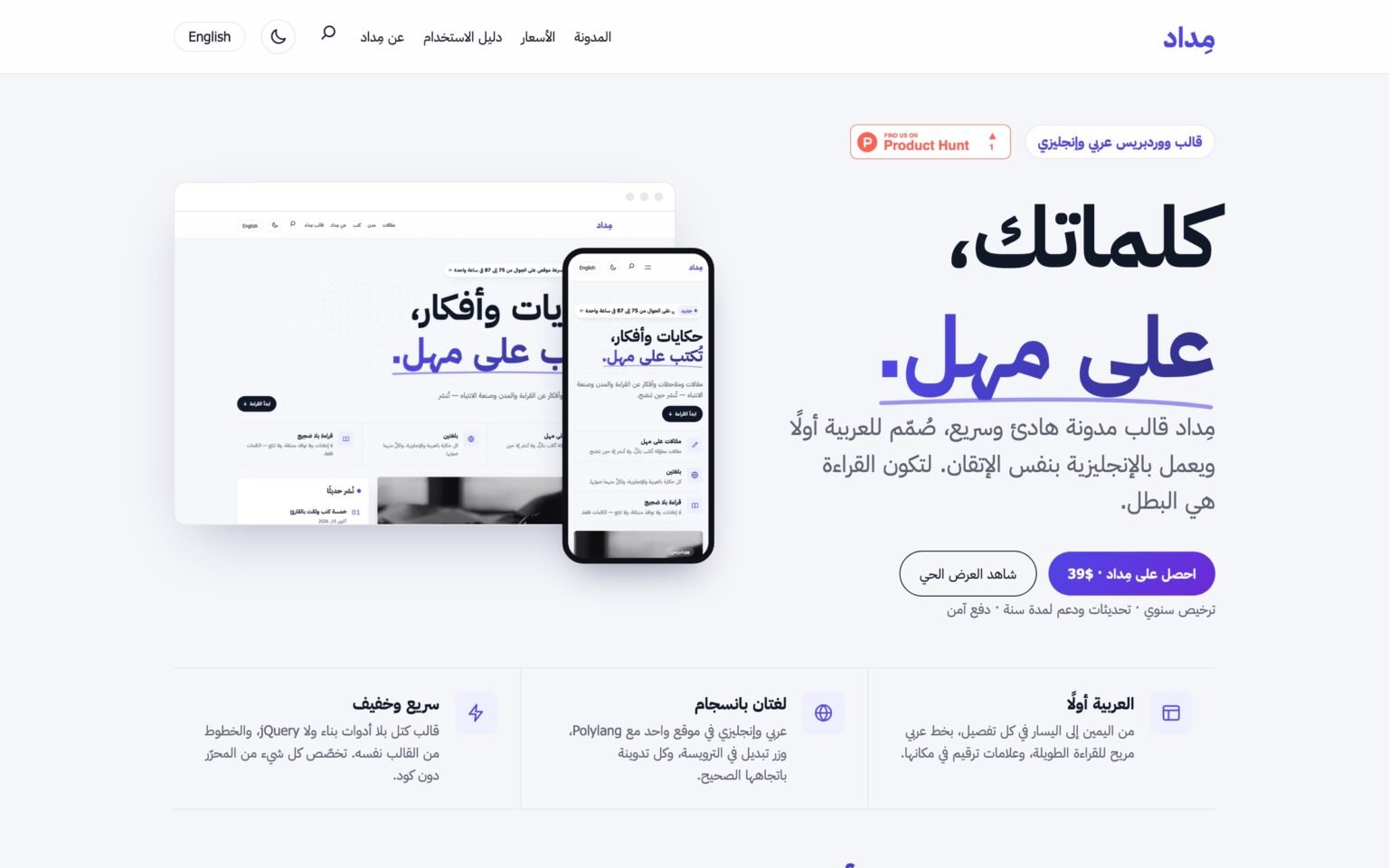
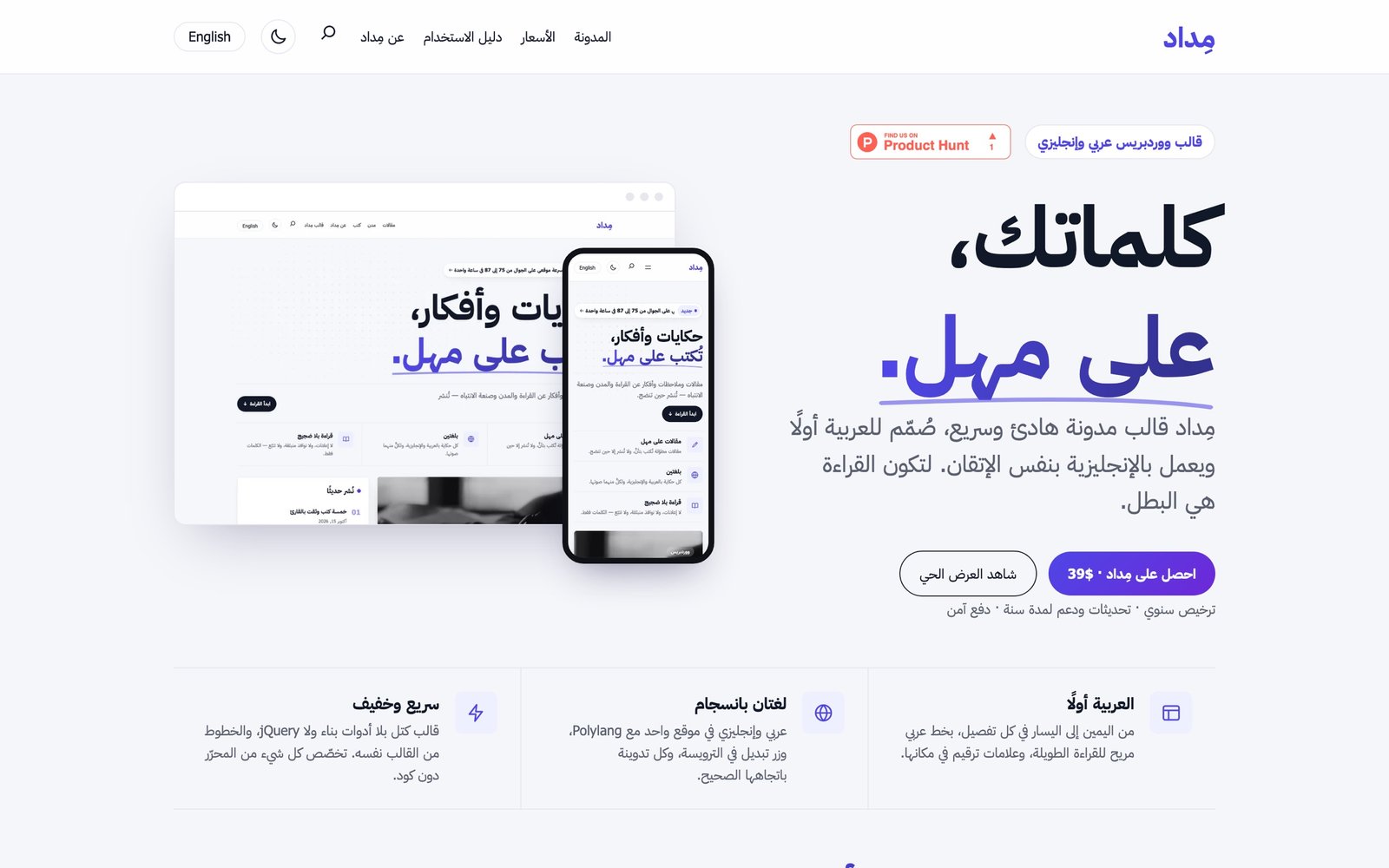
Midad homepage in Arabic, light mode, on desktop
The Arabic homepage, light style
06

The problem

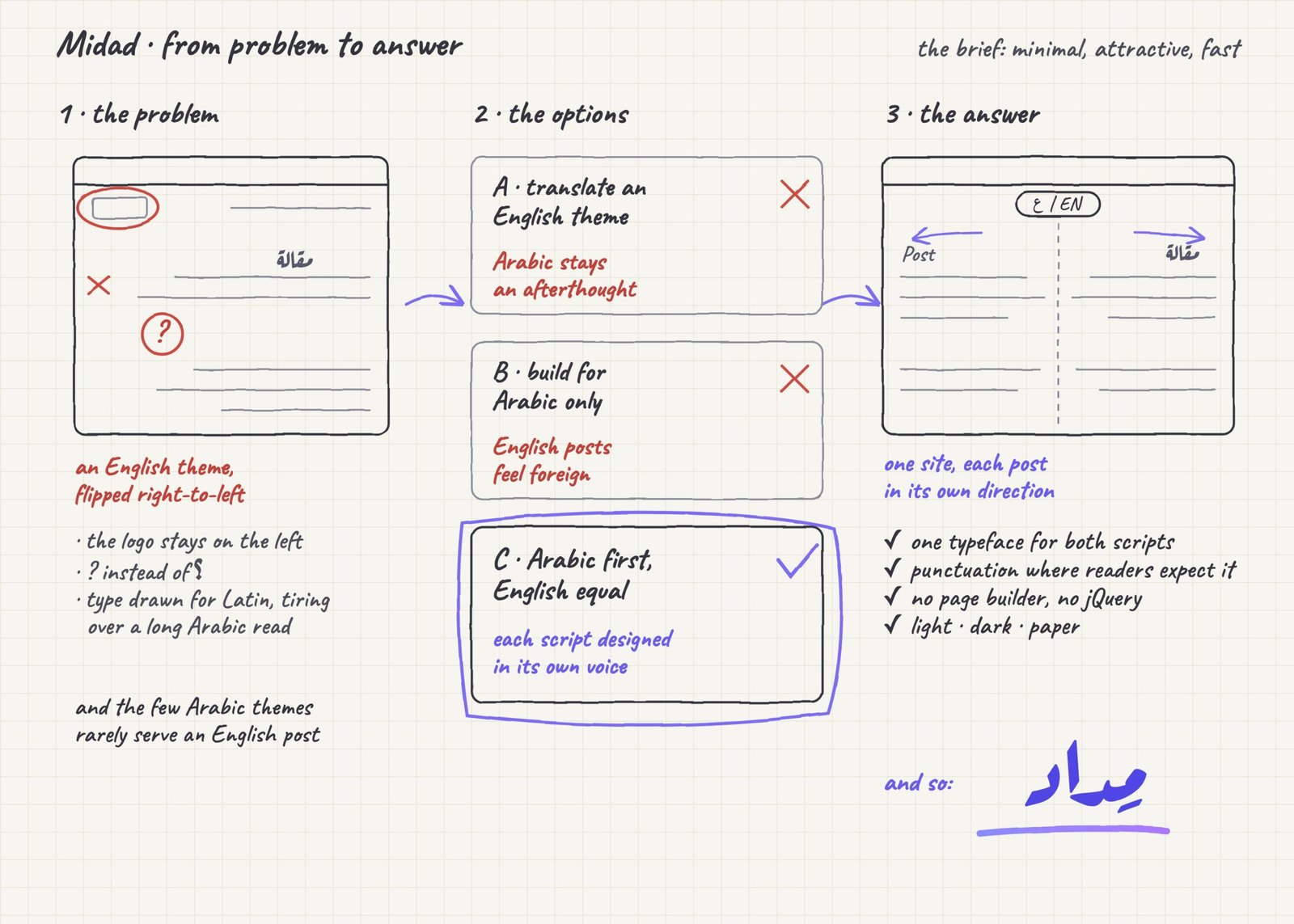
We couldn’t find a theme that did both jobs. In most themes, Arabic is an afterthought: an English design flipped right-to-left, with punctuation out of place and type that tires the eye over a long read. The few themes made for Arabic rarely served an English post as well. And we wanted something minimal, attractive and fast, not a page builder wrapped around a blog.
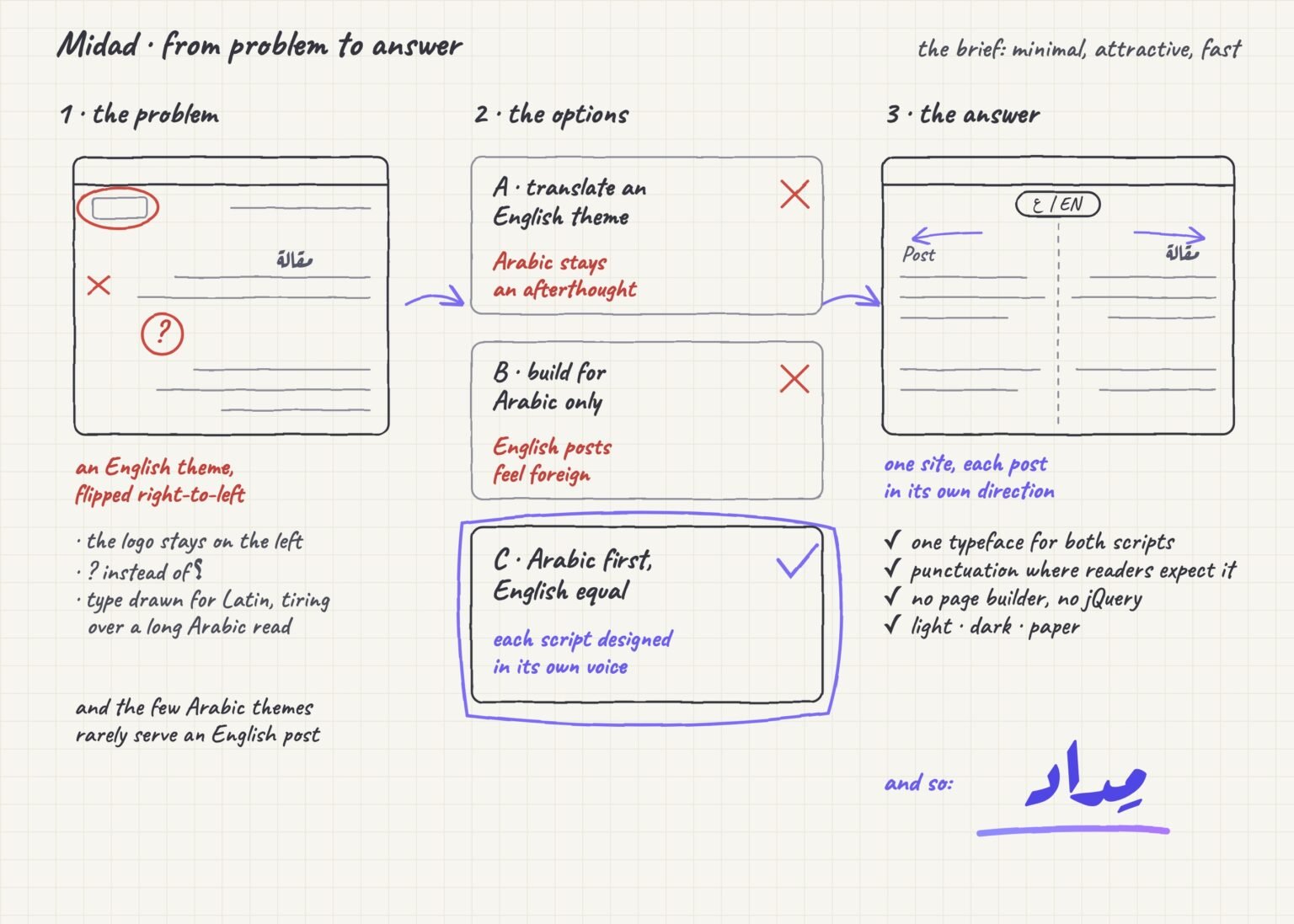
Hand-drawn sketch: from the problem, through three options, to Midad’s answer
From the problem, through three options, to the answer
07

The decisions

01Arabic first, English equal.Right-to-left in every detail, punctuation where Arabic readers expect it, and an Arabic typeface chosen for long reading, bundled with the theme. English posts get the same care: with Polylang, each post runs in its own direction, and a switch in the header moves between languages.
02Light by design.A block theme with no page builder and no jQuery. Fonts load from the theme itself, and everything can be customised in the editor without code.
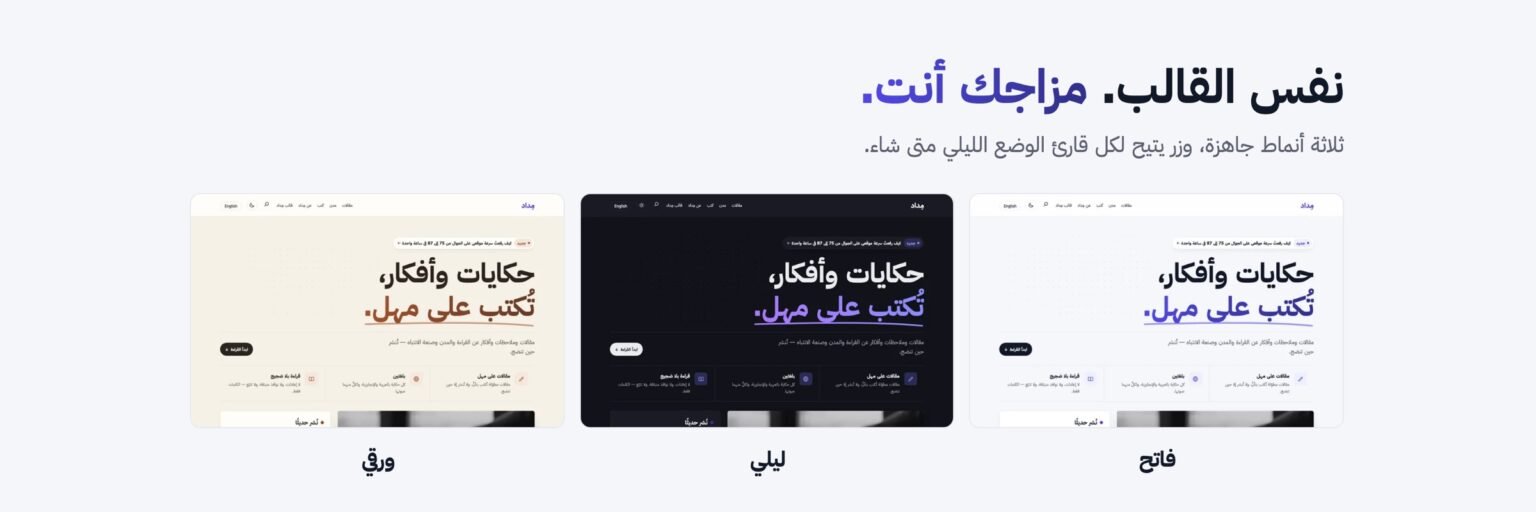
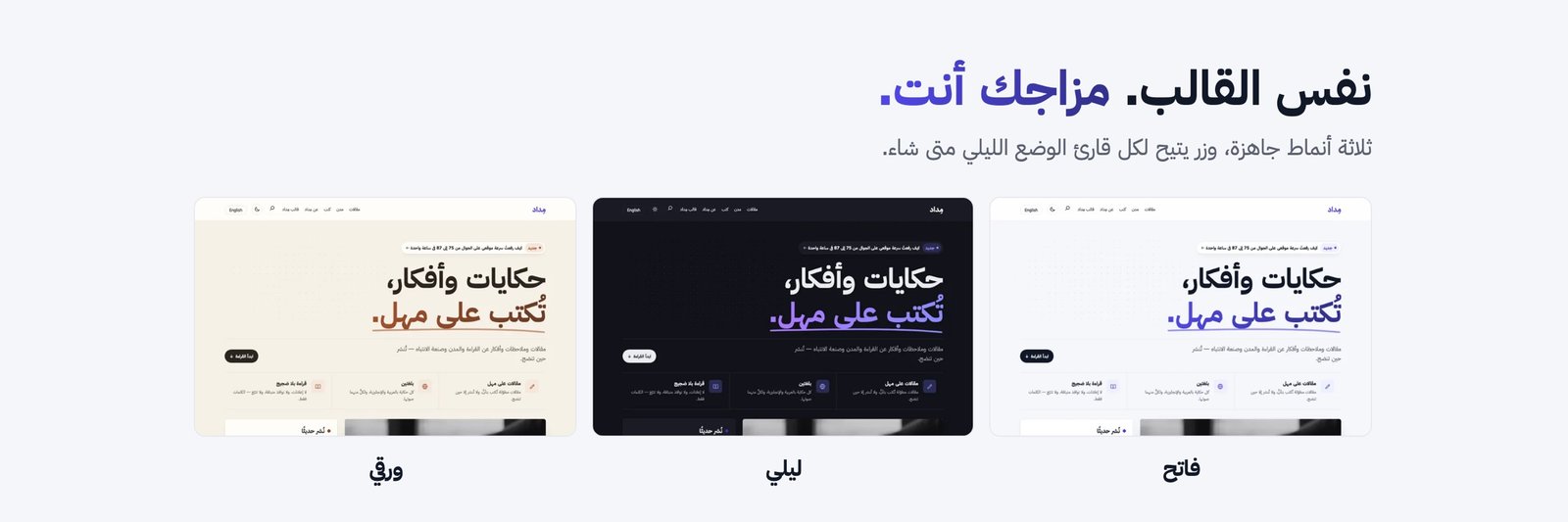
03One theme, three moods.Light, dark and paper styles, plus a toggle that lets every reader switch to night mode.
Midad’s three styles: light, dark and paper
Three styles: light, dark and paper
08

What we built: the whole system

01Name and identityThe مِداد wordmark, colour and type.
02The themeDesign, development, three styles, companion plugins and demo content.
03The websitemidad.blog in Arabic and English, built with Midad itself, with a live demo, user guide, FAQ, terms and privacy pages.
04SalesThree annual licence plans, checkout by PayPal or card, licence keys delivered by email.
05Content and socialArticles, including how we raised the site’s mobile speed, and a consistent post series on Instagram and X.
06LaunchOn Product Hunt.
07DirectionArt direction and project management from first sketch to launch, by the same hands.
09

In use

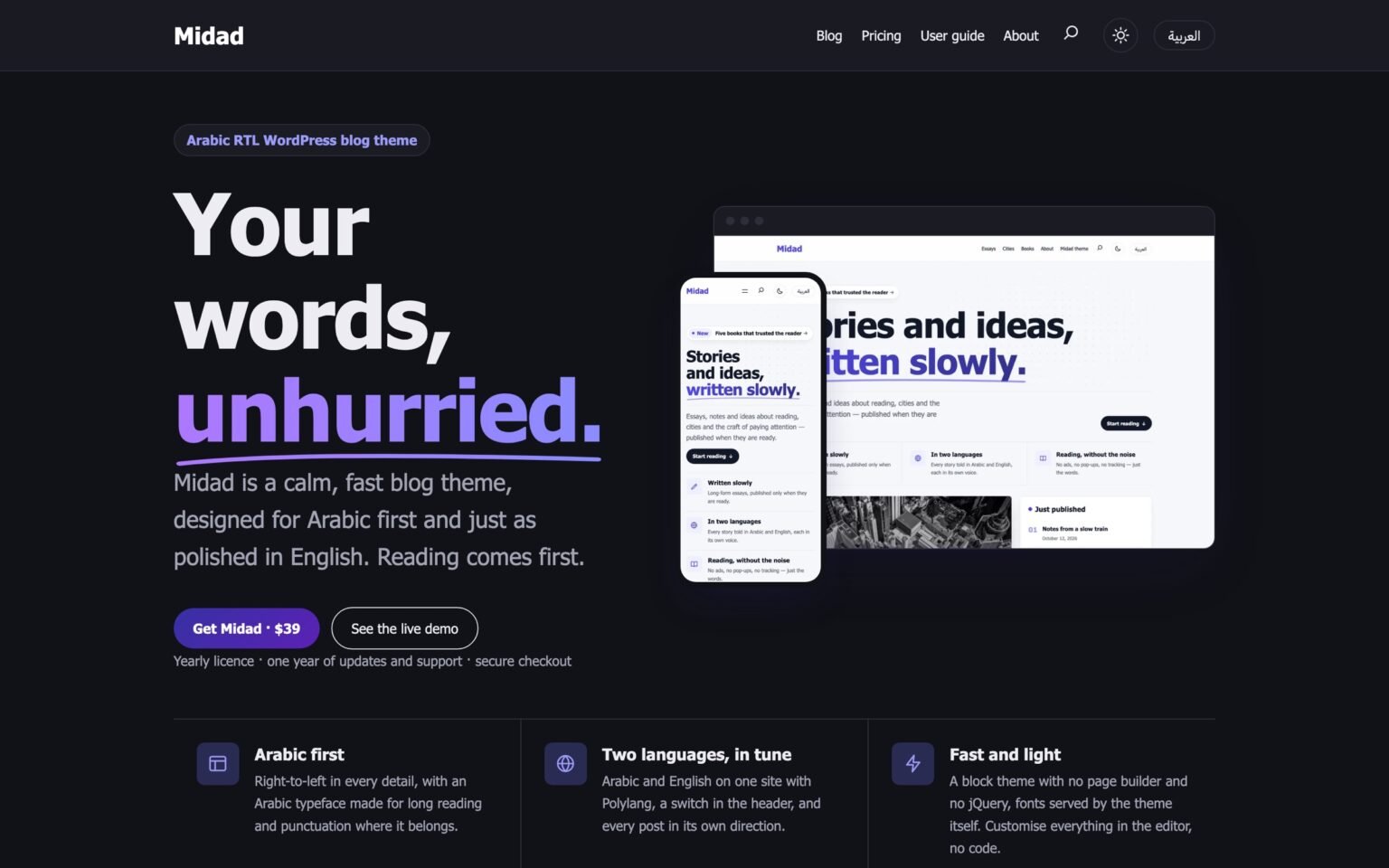
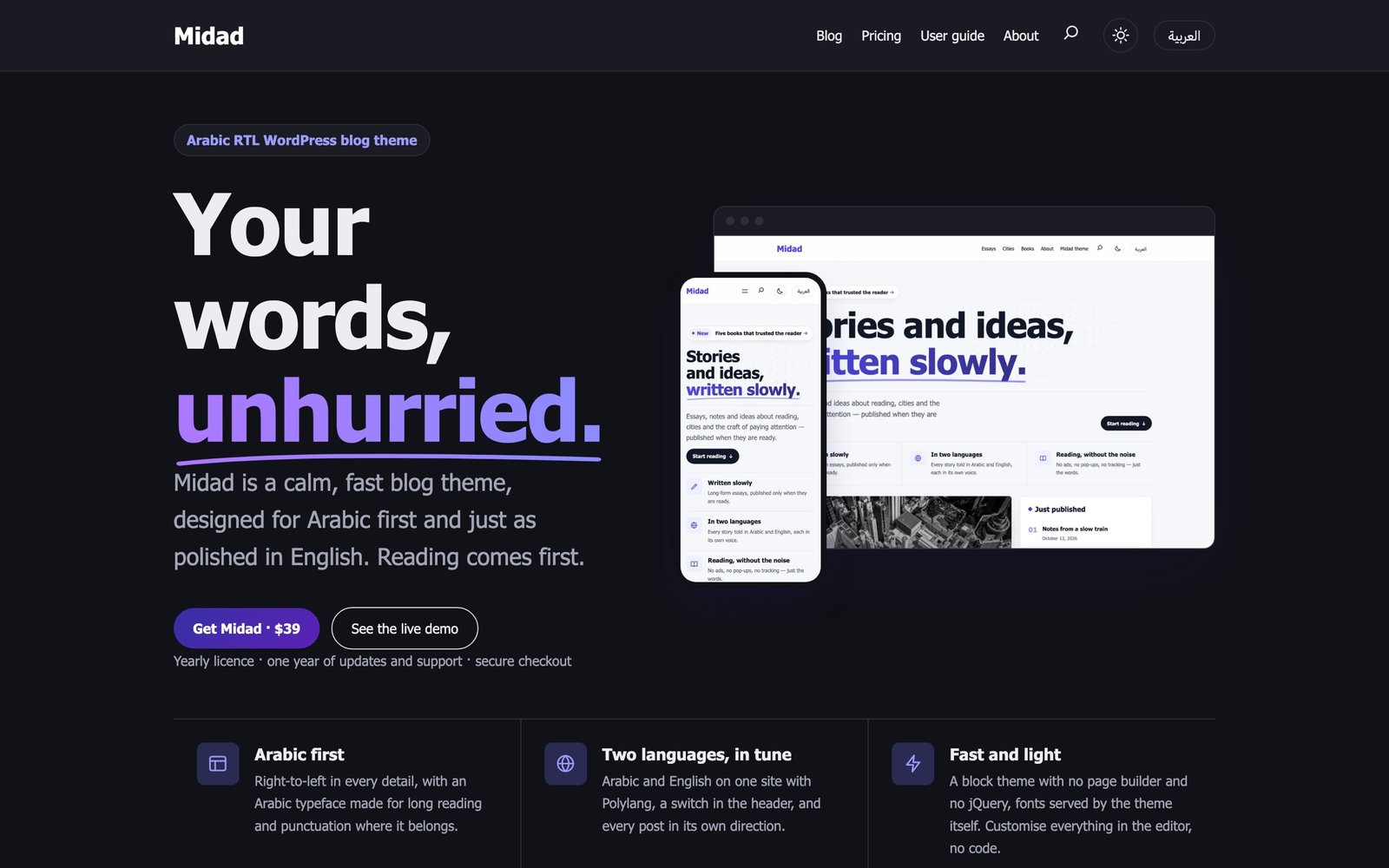
Midad’s English homepage in dark mode
The English homepage, dark style
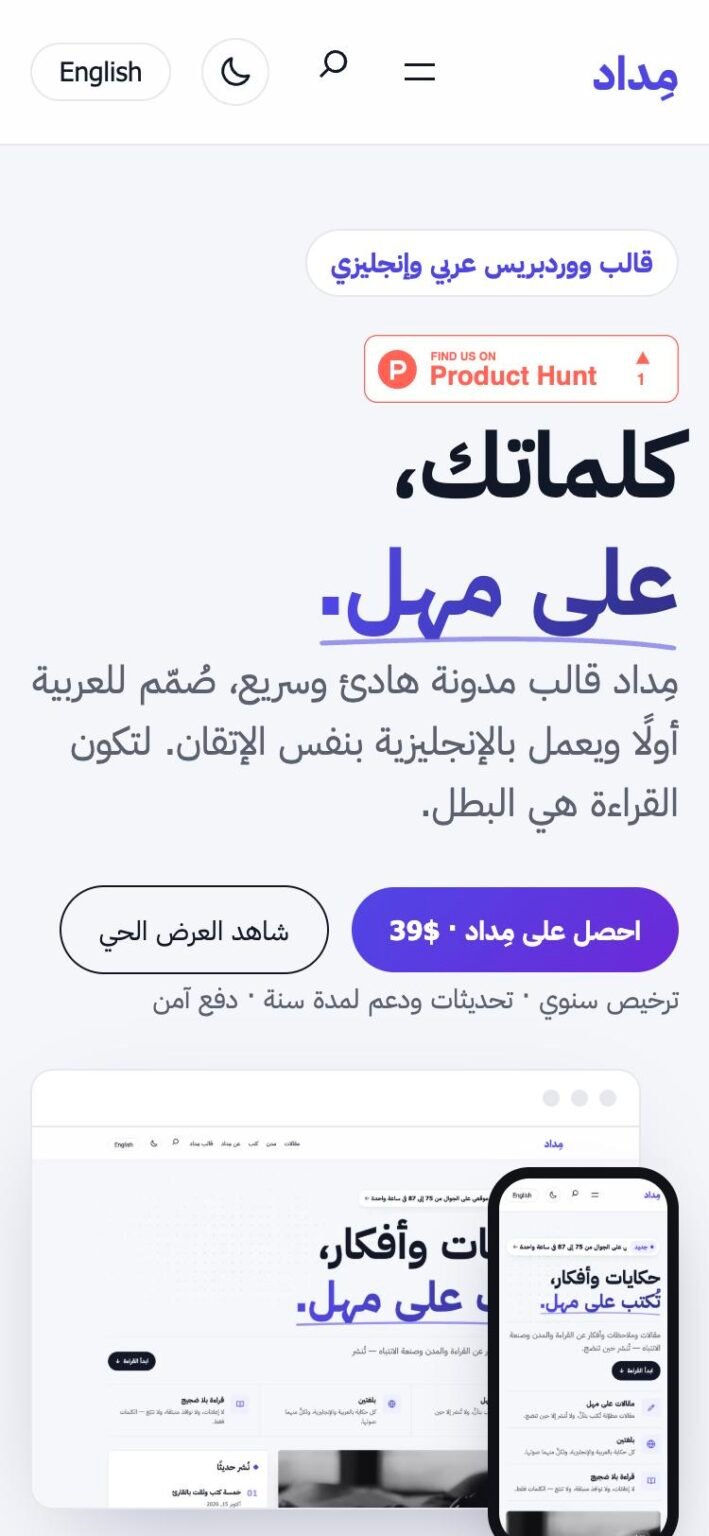
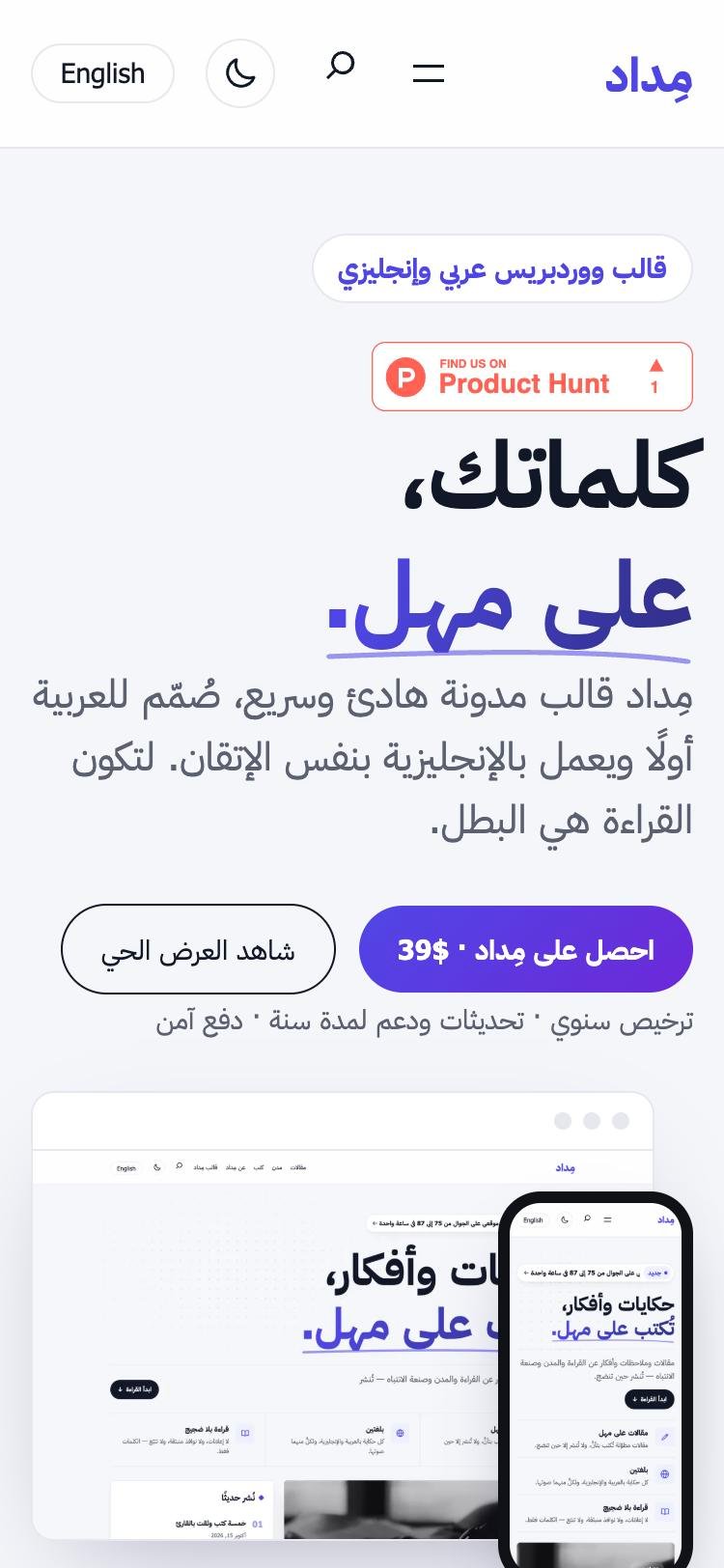
Midad homepage on a phone, light mode
Phone, light
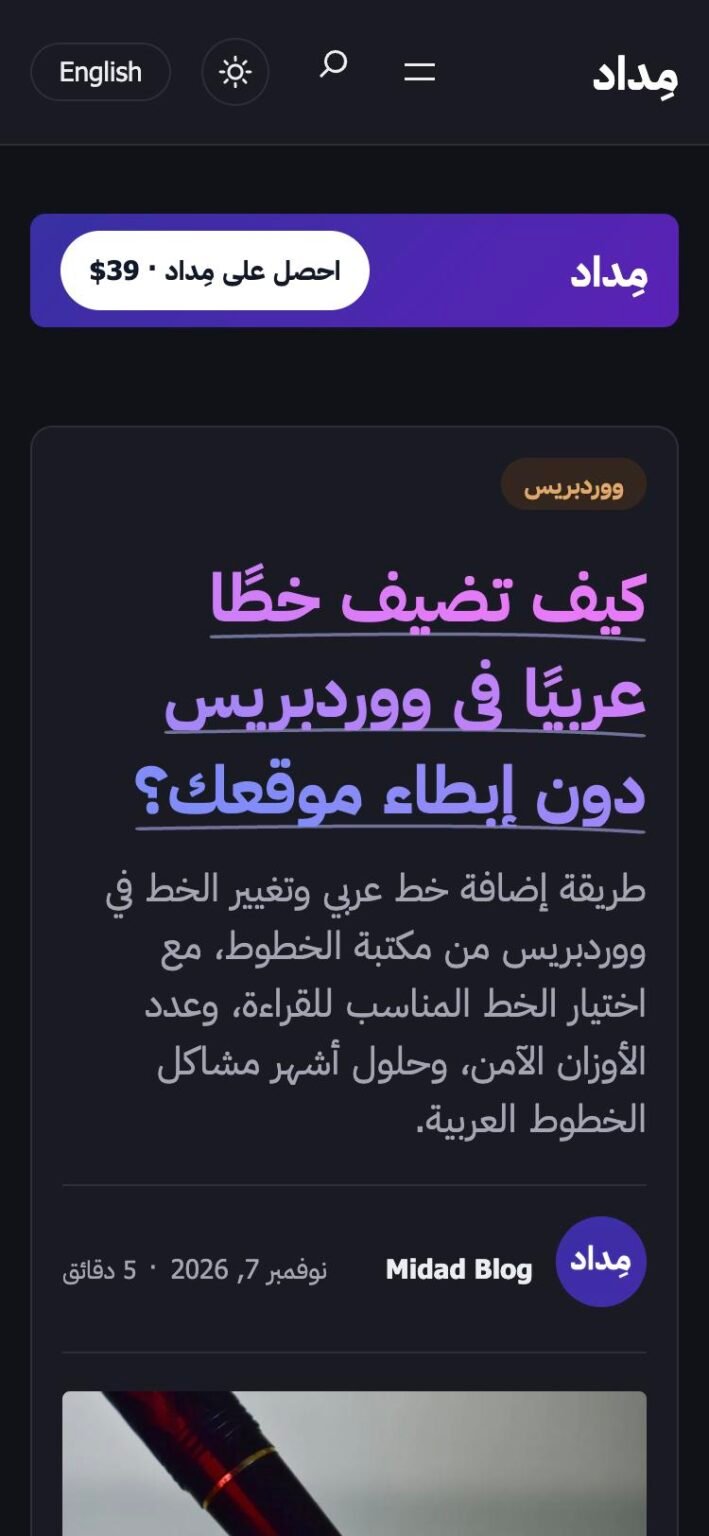
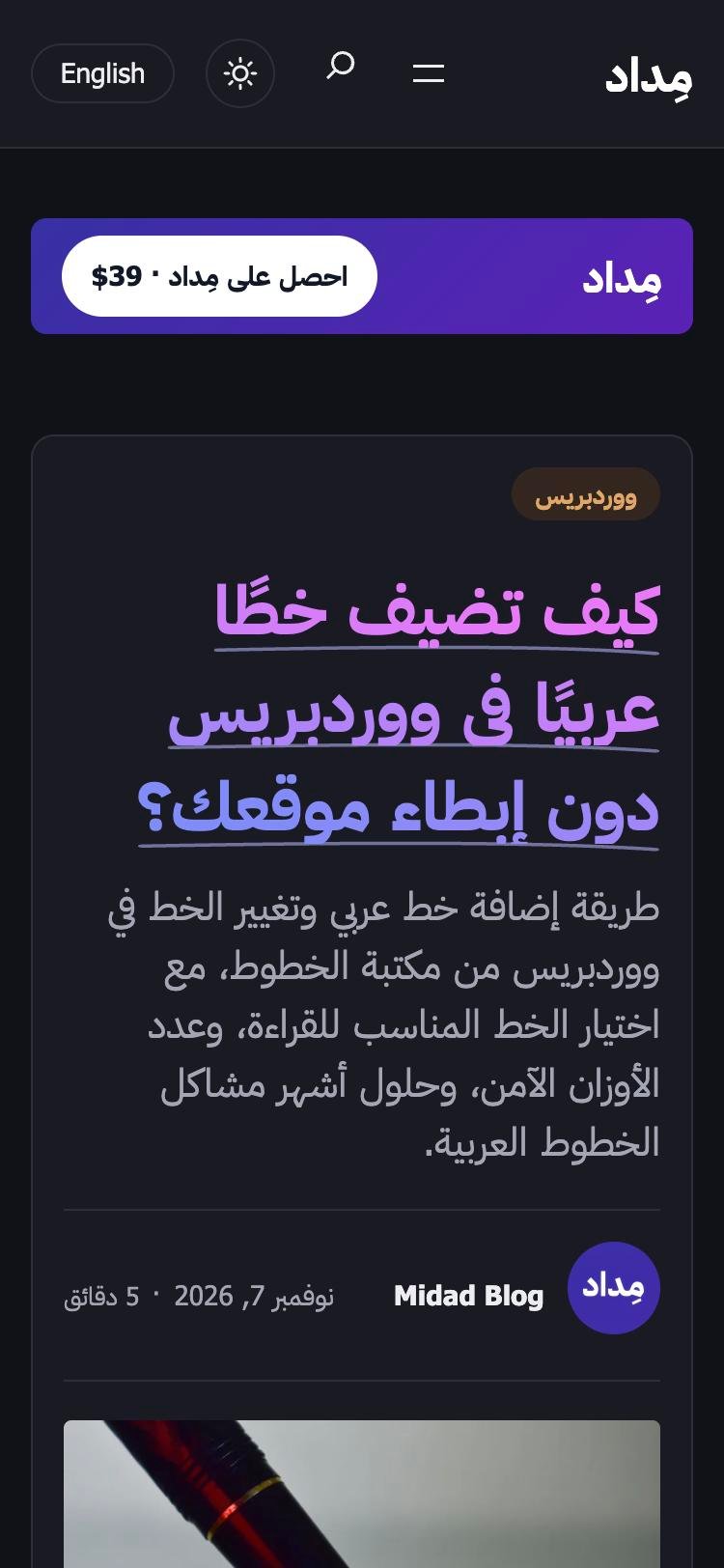
An Arabic article on a phone, dark mode
Phone, dark
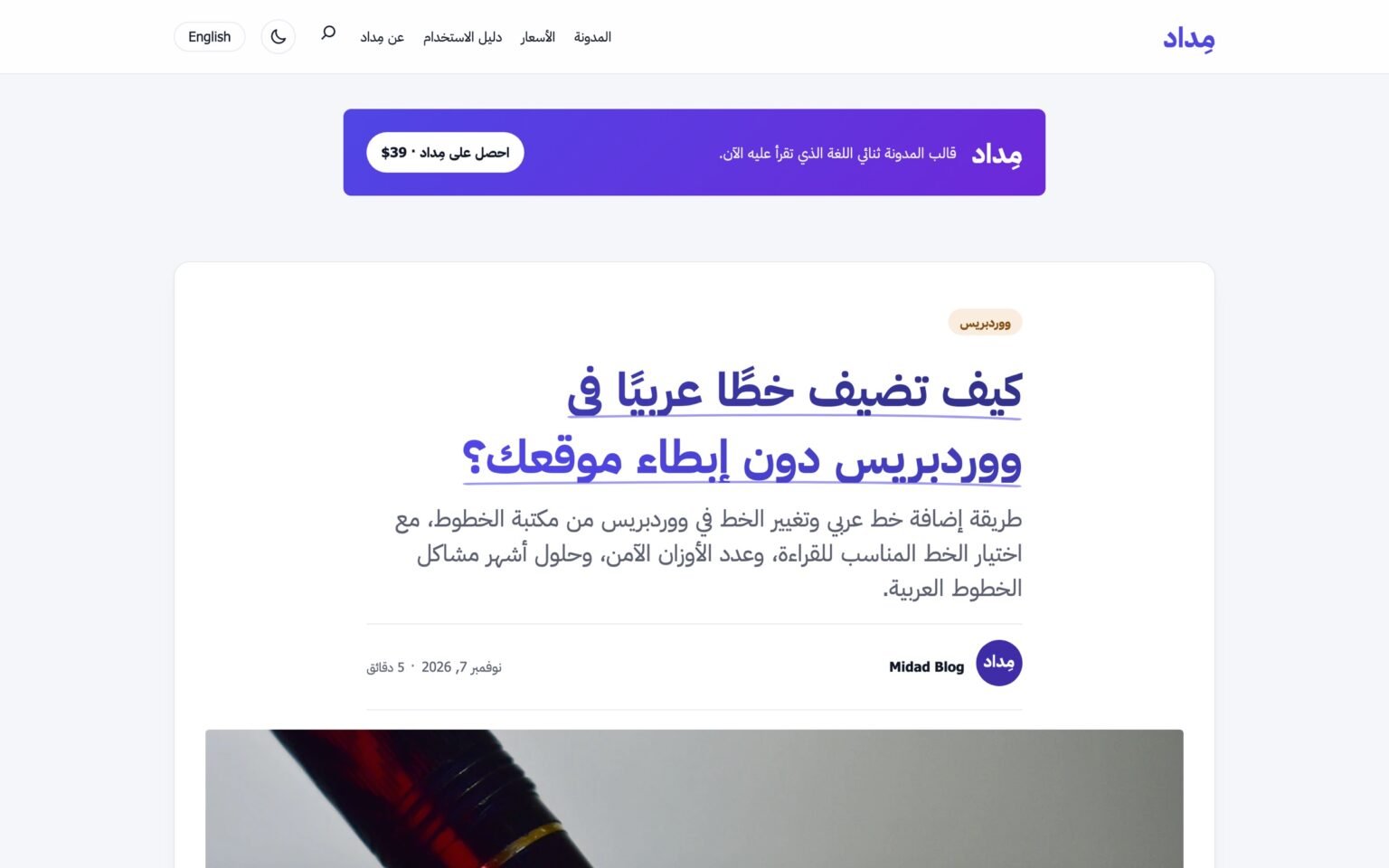
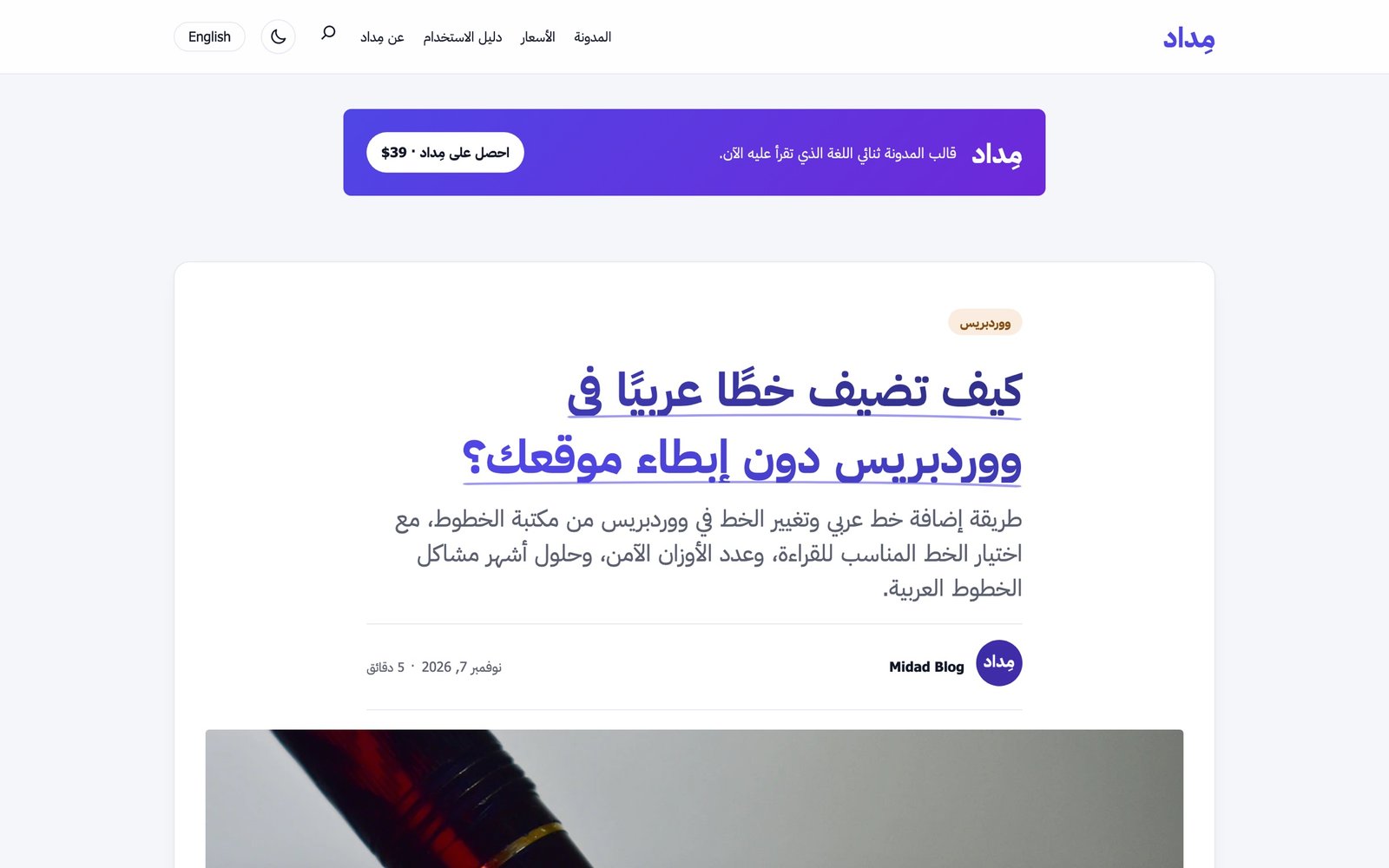
An Arabic article on desktop
10

The result

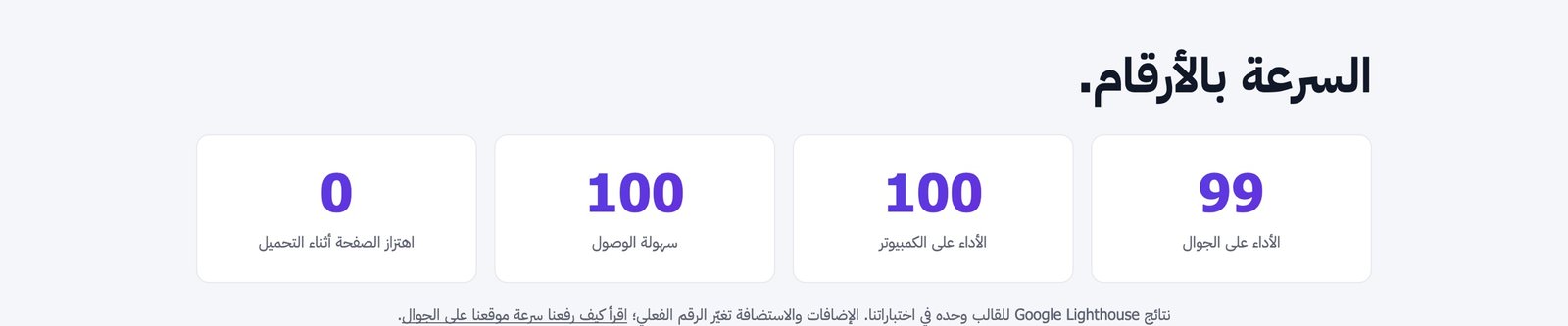
In Google Lighthouse tests of the theme on its own. The site where you buy Midad runs on Midad.
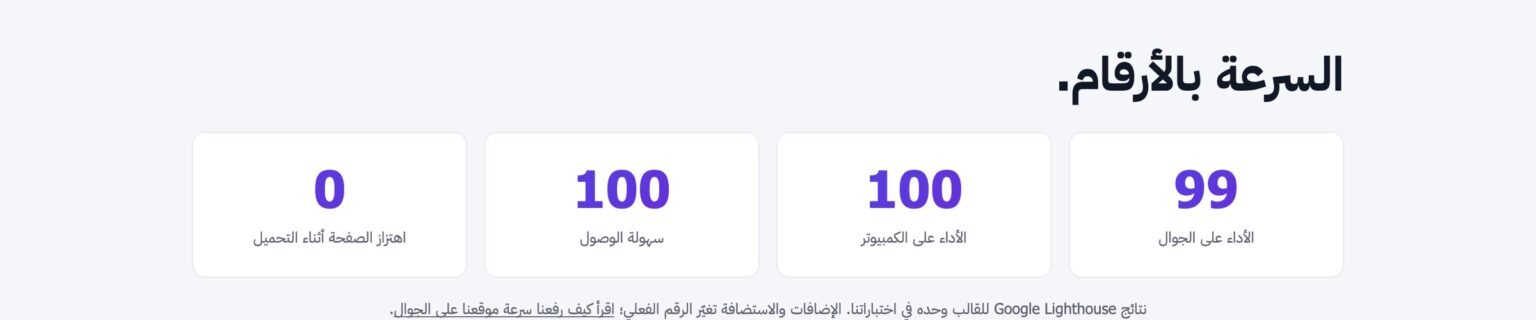
99Mobile performance
100Desktop performance
100Accessibility
0Layout shift
Lighthouse scores: 99 mobile, 100 desktop, 100 accessibility, 0 layout shift

Midad is how we test our own advice: Arabic designed first, and every part of the system built by the same studio.

See Midad live →Want a product or site built this way? Tell us what you’re building →